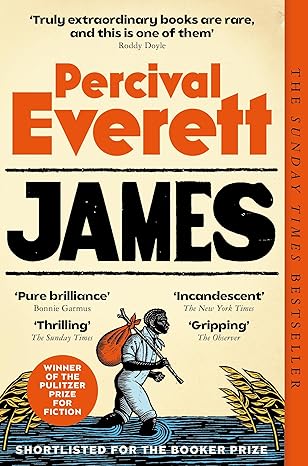
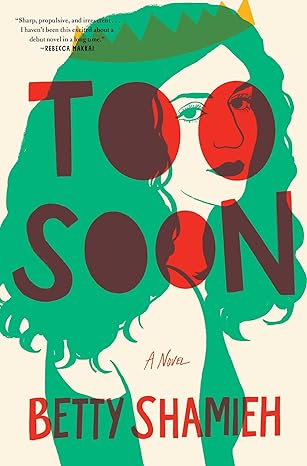
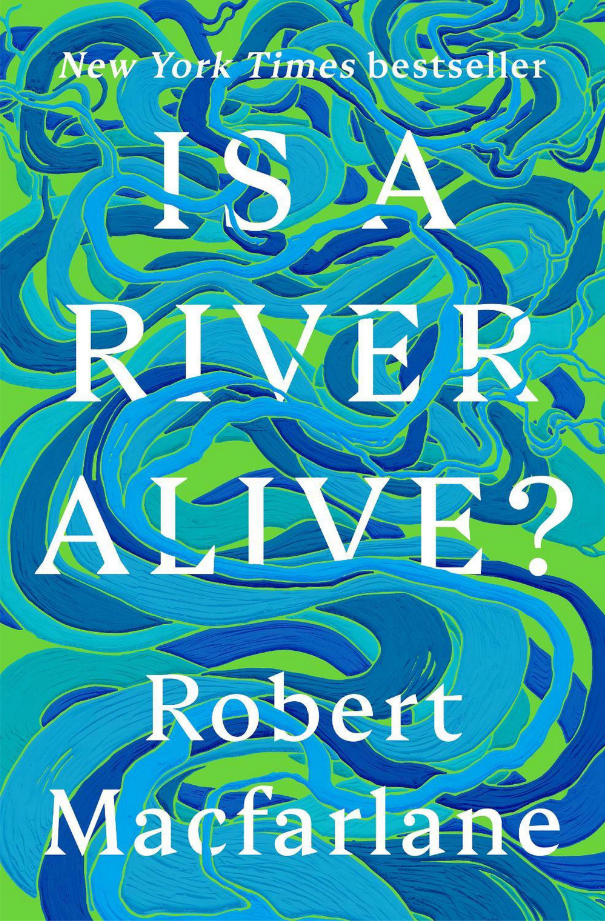
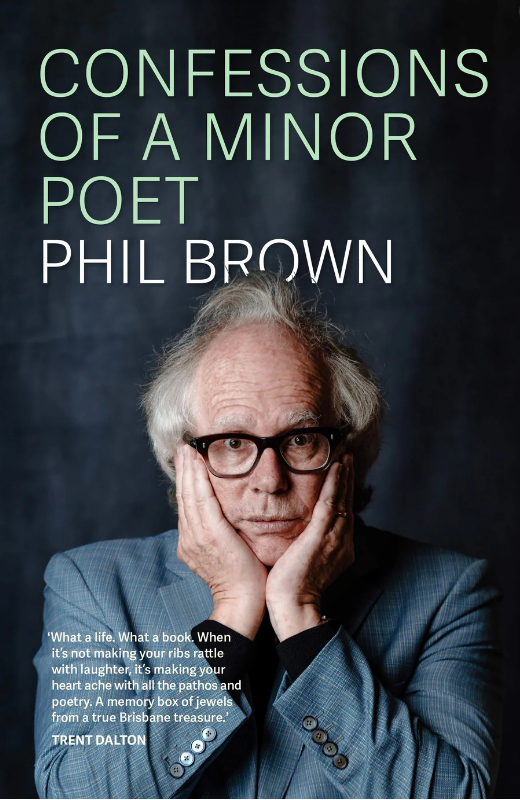
Author: Percival EverettPublisher: Mantle, an imprint of Pan MacmillanReviewer: Stephen Keim
The concept upon which James is based is simple. James is a reimagining of Mark Twain’s The Adventures of Huckleberry Finn[1] (“Huckleberry Finn”) such that the action is narrated by and from the point of view of the slave, Jim, who, as a runaway, shared Huck’s adventures in floating a raft downriver in Twain’s classic novel.
It is one thing to come up with an idea by which to re-imagine one of the most highly regarded novels in the canon. It is different and much more difficult to implement such an idea.
Percival Everett,[2] an accomplished and distinguished writer who, since 1986 has published over 20 novels, along with non-fiction works and poetry collections, is well-equipped for such a task. His grandmother had been a slave which also adds to his appropriateness for the task.[3]
James, in narrating the adventures, tells the reader many things that she may not have dreamed of, either reading Huckleberry Finn or otherwise. James is self-taught but very learned and, on odd occasion, he sneaks into Judge Thatcher’s library to read a little history or philosophy. Indeed, most Afro-American slaves speak English, very well, but knowing that, if they ever allowed white people to found this out, they would be punished or even killed, they only speak so when no white person can possibly hear them. In the presence of white people, they speak the dumb dialect expected of slaves.
Slaves conduct secret schools for their children who receive this learning but are also warned of the deadly dangers of ever revealing such knowledge.
The background facts reflect the circumstances in Huckleberry Finn. James and his wife and child are owned by Ms Watson. Judge Thatcher helps Ms Watson run her property including the slaves. This included ordering James to be whipped in the past. Tom Sawyer and Huck Finn make James the butt of their numerous practical jokes which James sees through but goes along with. James takes a protective interest in Huck whose town drunkard father, when he is around, belts Huck, unmercifully.
James conveys to the reader the severe prohibition on any Afro American looking at white people and, especially, the dangers of any Afro American male getting caught looking at a white woman, for even a moment.
The threat of violence that hangs over every slave’s life is not presented as a matter of generality. James and his friends discuss the news of lynchings happening in towns located just a few miles up or down river. And the reader gets to witness a particularly harrowing example of white on black violence.
James hears that Ms Watson proposes to sell James’ wife and child which would result in the family being forever separated. It is this threat that causes James to risk his life by running away in the hope that he can find freedom and make enough money to buy the freedom of his family.
And, so, Huck and James, coincidentally, flee at the same time; meet up by chance; and go on their river raft journey, together. The narrative is filled with many of the same shonky characters and knife edge events as were seen in Huckleberry Finn but each event, through the perspective of a highly educated and very articulate and clever Afro American, takes on a different perspective and a whole new meaning. Everett is adept at filling out James’ character through a narrative voice that makes use of an internal dialogue and philosophical ruminations that are indicative of his heightened intelligence. Everett, by giving James this agency, has effectively reclaimed James from the more caricatured “Jim” of Huckleberry Finn.
The relationship between Huck and James, through the eye of the older man, is told with great empathy and understanding.
As each set of dangers emerges and then subsides, only to give way to greater dangers, the reader is kept on the edge of her seat. Even an ability to remember how things all turned out well in Twain’s template is of little comfort on this reading journey because, seen through different eyes, events may take a different course.
Everett has set himself a difficult task. One misstep and James could have become preachy or trite and/or mere try hard.
I began my reading of James with a degree of scepticism that Everett or, indeed, anyone could carry off such a task.
As the novel proceeded, my doubts dissolved and my admiration increased. I think Everett has succeeded with flair.
James has won the 2024 Kirkus Prize; the National Book Award for Fiction and the 2025 Pulitzer Prize for Fiction.[4]
[1] See https://www.theguardian.com/books/2014/feb/24/100-best-novels-huckleberry-finn-twain.
[2] See https://www.goodreads.com/author/show/31723.Percival_Everett.
[3] See https://www.bbc.com/news/entertainment-arts-68762352.
[4] See https://en.wikipedia.org/wiki/James_(novel).
Author: Betty ShamiehPublisher: Avid Reader Press (an imprint of Simon & Schuster, LLC)Reviewer: Stephen Keim
Too Soon is a novel which tells the story of three women, members of one of the founding Arab Christian families of Ramallah, the administrative centre of the West Bank Occupied Territory of Palestine.
Each woman relates her story in the first person.
Arabella is a Palestinian American theatre director whose career which began, very promisingly, has, perhaps, stalled in recent times. Arabella relates events occurring in her life in 2012.
Zoya is Arabella’s grandmother and Arabella is the grandchild who has always been closest to Zoya. We know from Arabella’s narrative that Zoya is now (in 2012) living in America. But Zoya’s narrative begins in 1948 and takes the reader to Jaffa where Zoya is living with her husband and seven daughters. The family is wealthy and has moved earlier from Ramallah to Jaffa, the port city of Tel Aviv.
Naya, whose narrations are delayed until the last third of Too Soon, is Zoya’s seventh daughter and Arabella’s mother.
In the early parts of the book, the narration switches between Arabella’s story and Zoya’s story although the reader has some idea of Zoya as a grandmother in 2012 from the interactions described in Arabella’s narrative. This switching is an effective device at maintaining reader tension in that, on each occasion, the chapter seems to end at a point where the reader is desperate to know what happens next. That excitement must be shelved and the reader must calm down and try to recall the point to which the other narrative had reached and immerse herself, once more, therein.
Zoya’s story presents the shock of the Nakba as it was experienced even by wealthy Palestinians and how their lives were disrupted. Zoya’s family lose everything; flee back to Ramallah for their safety; and are forced to share a one room house belonging to Zoya’s father. Eventually, the family go to America with Zoya’s husband attempting to rebuild their life by working in the Ford Motor Company’s manufacturing plant in Detroit.
Meanwhile, Arabella’s 2012 narrative has her, in many ways, reluctantly, taking an opportunity to direct a British financed presentation of Hamlet scheduled to commence in Ramallah and tour the Occupied Territories. Part of what convinces Arabella to take the opportunity is that Zoya has conspired with another grandmother to have a Palestinian American doctor (also with Ramallah ancestral connections) telephone her. The telephone conversations have gone well and a meeting in person in Jerusalem looks quite attractive to Arabella whose adventures in love to this point in time have proved inconclusive at best.
Naya was married off at a young age and strongly against her wishes by her parents with Zoya taking an active and insensitive part in achieving that object. Her marriage took her to the Bay Area of California and her husband proved to be kind and smart and proved the latter by making lots of money. Nonetheless, like Zoya before her, Naya has always regretted that her education was cut short by marriage and childbirth. Her self-confidence suffered and she struggled to find friends and equanimity in her new life as a wife and mother. The relationship between Naya and Arabella has always proved testy.
Betty Shamieh has written 15 plays and Too Soon is her first novel. Shamieh became the first Palestinian-American to have a play premiere off-Broadway with the 2004 premiere of Roar, a drama about a Palestinian family. Shamieh would have had to do no more than draw on her own experiences and observations to fill in the details of Arabella’s fictional life as a New York theatre director.
Each of the central characters, Arabella, Zoya and Naya, has marked personality flaws and is capable of insensitivity, selfishness and a degree of cruelty. The reader is likely to attribute a degree of this conduct to generational trauma and each of the three has suffered, in different ways, trauma of this kind.
It is also the case that each of three characters are far from blushing violets when it comes to matters of sex and sensuality. This might be thought to be unexpected of three women, albeit, that they are from separate generations, who were raised in a very traditional culture and instructed that, as women, they should distrust all men and that a women’s role, from a young age, was no more than to serve and deliver children to her husband.
The use of the first person narrative is effective in allowing each character’s foibles to be revealed by the person relating themselves displaying such foibles. They acknowledge their wrongdoing but cannot help themselves. The result is that, no matter how unsatisfactory the conduct might be, the reader, hearing it from the person responsible therefor, is understanding of the context in which it happens.
Too Soon is obviously intended to present a Palestinian American view of life and the world. Although published in 2025, by being set broadly in 2012, the novel avoids commenting directly on the events of 7 October 2023 and the over two years of destruction of Gaza and killing of Gazans that has occurred since then.
Shamieh approaches the task of communicating a worldview in the style of Vercors’ brilliant World War II novel, La Silence de la Mer. Vercors uses a good Nazi who is kind but believes in the goodness of his nation’s intentions. Slowly, facts cause his favourable views to unravel. The propaganda value of the novel was much greater than if Vercors had portrayed all Nazis as bad people.
In a broadly similar way, Shamieh depicts Arabella as interested only in her own personal life and unenthusiastic about the politics and injustices of her family’s homeland’s occupation. In Occupied Palestine, however, Arabella’s love interest, Azziz, who is volunteering as a doctor in Gaza, has bullet wounds through both legs acquired when attending a demonstration. Azziz also relates his massive sadness and anger at the deliberate actions by the IDF in shotting talented young Palestinian footballers in the legs to wreck their chances of a football career. And through the experiences of Arabella and Azziz, the reader obtains a consciousness of Ramallah as, on the one hand, a thriving metropolis but, on the other, a city under siege which can only be entered or departed from through uncertain checkpoints staffed by soldiers with high-powered weapons always at the ready.
The most moving depiction of life under Israeli occupation is through Arabella’s interactions with a group of young women all of whom have spent some time detained in Israeli prisons and who have to debate whether or not it would only make their lives worse to complain about being sexually assaulted at checkpoints by a male Israeli conscript.
But Too Soon is far from a propaganda piece directed at Israel. Arabella is markedly affected by hearing the story of a mother of a Jewish theatre colleague and friend who, with her family of Egyptian Jews, was forced to depart from Egypt by the government of that country.
And Too Soon is also about how traditional patriarchal Palestinian culture, with its early arranged marriages and its devaluing of the lives of women as people, prevents them from pursing their aspirations for education and a valued existence outside the home. Too Soon carries the warning that all cultures must look inward and be prepared to criticise those customs which, despite an honoured history, do harm to people within that culture.
Finally, Too Soon is a novel about life and loving and finding one’s way. It is about how our respective families prepare us for the outside world but, at the same time, place us at a disadvantage. Too Soon is very much about lost loves and lost love. It is about making good decisions but, also, about making things work, no matter what.
I found myself turning pages to find out what was going to happen next. But I have, since I finished reading, also found myself thinking about the issues raised by Too Soon and what they mean for other lives.
Author: Robert MacFarlanePublisher: Hamish Hamilton (an imprint of Penguin Books)Reviewer: Stephen Keim
It is nicely ironic that, about a year after reading and reviewing my friend and former chamber mate, Simon Cleary’s first foray into non-fiction books, Everything is Water, I should embark upon Robert MacFarlane’s Is a River Alive? Simon’s work is his account of and reflections upon his journey traversing (mainly walking) the Brisbane River which has played such a significant role in his own life. Everything is Water, although framed as a positive statement originally articulated by Greek philosopher, Heraclitus, is a title seeking to indicate that Simon was asking the big questions not just going for a long walk.
I am fated to read about rivers. Langston Hughes’ The Negro Speaks of Rivers is one of my favourite poems.
MacFarlane’s Is a River Alive? is a story of three journeys involving rivers. As his title might suggest, MacFarlane, also, is not averse to big questions. Each such journey is the focus of one of the three parts of Is a River Alive?
MacFarlane was born on 15 August 1976. He is within 12 months of his fiftieth birthday. He is the author of ten non-fiction books. From their titles alone, one may infer with some degree of comfort that many of these books required much physical exercise in the acquisition of the experiences on which they were based. The three journeys described in Is a River Alive? are no different and one can empathise with the occasional aside by Macfarlane in the text that his body’s resilience is being tested by the task he has asked it to perform.
The structure of Is a River Alive? is very simple. MacFarlane has chosen three different parts of the world in which rivers are being stressed and threatened. He undertakes a journey in order to experience the waterway’s qualities and to understand those who would destroys those qualities and, in large part, the river, itself.
Most importantly, MacFarlane does not take these journeys, alone. In the case of each of the threatened environments, he has located and become friends with people who belong thereto and who are working to protect it. The journey, in each case, is made with these colleagues and it is the interactions with them and the wisdom and learnings that they bring which are as important as MacFarlane’s own reflections and the contributions of the rivers, themselves, to the narrative.
Part 1 of Is a River Alive? document’s MacFarlane’s journey to the Los Cedros Cloud Forest in Ecuador which hosts the upper reaches of the River of the Cedars. The cloud forest and the river are threatened by the predations of mining companies but, in contrast to other majestic environments in Ecuador, for the moment are protected.
Part II documents a trip to Chennai and its environs in Tamil Nadu state in India. This is the story of three rivers which flow through Chennai which are, in many parts of their respective courses dead and devoid of life. This narrative is one that finds life and beauty amongst destruction and a story of activists prepared to fight rearguard actions to protect what remains and to roll back the destruction which has occurred.
Part III occurs in northern Quebec. It is the story of the Mutehekau Shipu River and those who are fighting to protect it from Hydro-Quebec, a state hydroelectricity company whose insatiable desire to build dams and, thereby, turn living rivers into dead lakes rivals the madness of Tasmania’s dam builders who drowned Lake Pedder and tried to destroy the Gordon below Franklin.
MacFarlane lives in Cambridge in England. As a prologue to the three stories of grand rivers, he provides an archeologically informed short prehistory and history of the chalk springs within walking distance of his home and the little creek to which they give birth. A little update on the life of the springs during the time it took to take each journey provides interludes and then an epilogue to the main narratives.
MacFarlane’s narrative, obviously, benefits from the landscapes through which he travels. The parts of the narrative are kept together by the themes of river ecosystems under attack and in danger of destruction by different aspects of humankind’s desire to subdue the earth; the rights of nature as a jurisprudential concept; and, of course, the overwhelming question which provides the title of the book.
The narrative, however, gains depth and richness from the expertise and personality of MacFarlane’s companions on his journeys. In the Los Cedros cloud forest, MacFarlane spends time with Giuliana Furci,[1] a very famous expert on fungi, two activist lawyers, Cesar Ridriguez-Garavito and Cosmo Sheldrake; two Ecuadorian Constitutional Court judges, Ramiro Avila-Santamaria and Agustin Grijalva Jimenez, both of whom sat on the case which upheld the rights of Los Cedros to be protected from destructive mining; and an idiosyncratic self-appointed forest defender, Josef DeCoux.[2] The companions and their interactions with MacFarlane and their experience, learning and expertise bring colour, movement and a sense of understanding and social context to MacFarlane’s account of his experience within the cloud forest and the complex ecosystems of which it is comprised.
Since the events described in Is a River Alive?, the Trump allied Ecuadorian government sponsored a referendum to remove the rights of nature provision on which the Los Cedros decision was based but the proposal was, overwhelmingly, rejected by the Ecuadorian electorate.
MacFarlane explores the Chennai river systems with Yuvan Aves, a twenty-seven year old teacher and activist. Aves spent much of his first 14 years being beaten badly by his stepfather. Finally, he decided to run away – to his school – which sent him to a residential school, fifty miles away, called Pathashalla KFI, and it was there that he put his life back together and further developed his incredible skills to observe, understand and teach nature. Living with Aves may be something of a challenge since his love of and devotion to invertebrates, along with other cuddlier forms of life mean that wasps can conduct their lives alongside those of the humans living in the house without fear of disturbance.
The three main rivers, Adyar, Cooum and Kosasthalaiyar, are considered devoid of life where they pass through Chennai although heir upper reaches still support many species of birds and other forms of life. The lower reaches are not only practically unable to support life, they are positively dangerous to humans through the poisonous pollutions they have acquired from years of industrial operations.
In this context, no fight is too big or too small for Aves’ and his students and allies. He guides MacFarlane through a scrappy piece of restored woodland pointing out the plants and pollinators who have established themselves in this tiny refuge.
MacFarlane is told a story of the ruthlessness of those who support more industry at the cost of humans and every other species. The story comes with a map. In the nineties, in the wake of the Rio Earth Summit and Agenda 21, the Indian government directed state and regional governments to prepare plans to protect the environmental qualities of waterways within their jurisdictions. A beautiful backwater of the Kosasthalaiyar River, Ennore Creek, was favoured by industrialists and their politician mouthpieces for more polluting development. In order to prevent their plans from being curtailed by environmental planning processes, the local authorities produced a map of Ennore Creek which disappeared the water body. For years after, local residents sent the federal environmental bureaucrats pictures of themselves, neck deep in water, with the message that the map was wrong and a waterbody requiring planning existed in accord with federal laws even as new factories were approved, built and operated.
It is this destructive heritage that Aves and his helpers fight to unravel and unwind, protest by protest, court case by court case. And, against all odds, they win small victories, one after another. Whereas the Los Cedros is a battle to protect a priceless environmental area from the forces that would destroy it, the Chennai story is one of winning back environments that have already been destroyed and stolen. It is a story of hope and resilience.
For his visit to the Mutehekau Shipu River, MacFarlane commences a car journey along the Gulf of St Lawrence with Wayne Chambliss, a polymath whose special talent is understanding and experiencing geophysical processes.
Their road journey ends at Ekuanitshit, a small Innu community near the mouth of the Mutehekau Shipu. This is where MacFarlane meets Innu poet and activist, Rita Mestokosho. Rita is not coming on the next part of the journey but she gives both Chambliss and MacFarlane instructions and directions on the spiritual aspects of their time on the river.
Going to store his possessions unwanted during the next part of the journey, MacFarlane recruits a fisherman and kayak adventurer, Ilya Klvana, to the journey. The final two members of the group, Raph St-Onge and Danny Peled, are to provide the practical expertise that is particularly needed to get MacFarlane and Chambliss safely through the dangers that await them.
The first part of MacFarlane’s third river experience involves many hours of flying north in an old, float plane, a De Havilland Otter, to the northern shore of Lac Magpie, a long lake that interrupts the Mutehekau Shipu’s rapid journey to its mouth in the Gulf of St Lawrence. The main adventure involved a number of day’s paddling the windy lake followed by more than a week descending the rapids any one of which could result in death or injury. It is one hell of a way to find connection with even a glorious river. It is comforting to the reader to know that MacFarlane must have survived because he is telling the story.
Is a River Alive? is a crusading book and its author seeks to explore and promote different ways in which the rights of nature can help prevent the glories that have not yet been destroyed by obsessive humans.
While the message is clear, the tone never approaches any kind of hectoring. MacFarlane allows the landscapes to do their own talking. MacFarlane’s own explorations of character and context maintain the reader’s interest level so high that the reader never feels yelled at. The personalities and sheer pedagogic knowledge of MacFarlane’s various companions also add to the interest level.
Is a River Alive? is a great book about the importance of conserving nature. But it is also an example of an excellent travel book, a genre in which I have maintained a long interest.
[1] MacFarlane is a very impressive observer of birds wherever he travels. Furci is a mycologist. There is banter between the two of them about whether looking up or looking down is the best way to understand the world.
[2] DeCoux died in May 2024: https://www.rainforestconcern.org/news/hero-of-the-ecuadorian-rainforest.
Author: Phil BrownPublisher: Transit LoungeReviewer: Stephen Keim
Since late high school, Phil Brown has taken his poetry, seriously. One of his early poems was reproduced, that is, glassed in and part of the bottom of a surfboard that his mate made for him for Brown’s 18th birthday.
For large periods of his life, Brown worked at getting his verses on paper and sending them off to various publications in the hope that an editor would accept them. Some did but Brown received his fair share of rejection letters. Brown would quibble with “fair share”. He would suggest “unfair share” but he would probably accept that every aspiring and even established poet would feel the same about their works.
Confessions of a Minor Poet (“Confessions”) is a memoir covering Brown’s life from his days at Miami State High School to his placing the last full stop onto the last page of Confessions. Brown is happy to confess that Confessions is his fourth memoir and that he may be turning a life well lived into a life much written about.[1]
Confessions is not just about the poetry. But it is the poetry that binds the story of a life together. Brown is self-deprecating in his times of greatest triumph. His self-deprecation is the source of much of his best humour. And Brown’s writing is always inclined to make the reader laugh.
Brown’s poetry has not been without success. He was friends with, and his poetry was respected by, greats such as Bruce Dawe and Les Murray. As well as the rejection slips, Brown received plenty of letters telling him that his work had been accepted for publication. He has been published in the best specialist poetry magazines and in less specialist publishers such as the Courier-Mail and the Age newspapers.
Brown is also a successful and respected journalist. As I mentioned in the review of Kowloon Kid, Brown will be known to many readers of this review as a former Arts Editor of the Courier-Mail and a columnist in the Brisbane News.
Remarkably, however, from somewhere in his secondary school years until about 1990 when he was approaching his mid-thirties, Brown’s life teetered on the edge of chaos. For most of this time, he ate poorly and drank excessively and, very early on, he acquired a stomach ulcer. His poor physical and mental states led to Brown using many medications, both prescribed and non-prescribed. The prescription drugs gave rise to an addiction to benzodiazepine. Along with all of this, came a significant degree of social isolation.
It is a tribute to Brown’s talent and resilience that, despite all these factors ranged against his existence, let alone, success, Brown continued to surf waves; fall into and march out of media jobs; and maintained an output of journalistic writing and poetry of which many in both vocations would be proud.
Writing Confessions is a pastime that every memoirist would dream of. Creating humour by poking fun at oneself and the world is easy when the writer has a good case that most things that could go wrong were going wrong. And what better for “a minor poet” than to be able to discuss the act of creation as well as to rehearse one’s favourite lines and stanzas across the pages of the memoir.
A lot of this went awry in the early nineties when Brown was approaching his 35th birthday. Brown weaned himself from all of his addictions; met and married the woman of his dreams; and started a happy family that is still going strong. Brown got offered better jobs; acquired renown as a journalist; and stopped telling editors to shove their job, somewhere inconvenient. Even worse, Brown stopped writing poetry for more than a decade.
At this point in the narrative, Confessions is no less interesting but it stops being a rollicking string of side-splitting disasters and becomes more of a well-written travel book. The reader ponders whether the unity has been lost; whether, maybe, she has picked up the other half-read book from the bedside table.
Then, the poetry, in the middle of Covid, comes back for Brown and he starts writing it again. Matt Foley, the Arts Minister’s warning that poetry is an incurable disease turns out to be true.
And the unity comes back. The grand plan of the book becomes evident. The reader realises her error. Confessions was never destined to be just about making light of addiction and hard times. It was always about the poetry and the struggles involved in writing it and finding people to share it with.
Confessions is a triumph.
[1] Travels with My Angst (2004), a collection of travel stories; Any Guru Will Do (2006), about Brown’s search for meaning in life as a young man; and The Kowloon Kid: a Hong Kong childhood (2019) are the other memoirs. Brown’s poetry collections are Plastic Parables: selected poems (2006) and An Accident in the Evening (2001).
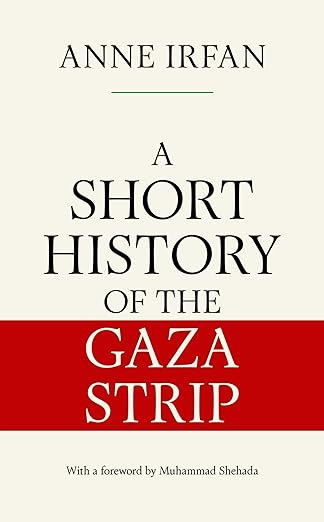
Author: Anne IrfanPublisher: Simon & SchusterReviewed: Stephen Keim
Considering Gaza’s long connections with many empires going back to that of Ancient Egypt, at slightly over 200 pages, A Short History of the Gaza Strip (“Short History”) is, indeed, short.
Perhaps, for reasons of acute current relevance and reader’s accessibility, apart from a few pages of introduction, Dr Irfan has limited the scope of Short History to the period commencing with the Catastrophe or Nakba in 1948 and finishing, by way of an Epilogue, with the bombing and invasion of Gaza that followed the Attacks of 7 October 2023.
Indeed, that title of the last chapter seems to emphasise that one of the purposes of Short History is to assist lay readers to place the events of 7 October and the events that have followed in a historical context.
In another sense, the Gaza Strip, itself, does only date from 1948, as Irfan explains. In 1948, when the State of Israel was established by force over 78 per cent of what had been Mandatory Palestine, it also claimed the majority of what had been known as the district of Gaza leaving just 141 square miles as the newly formed Gaza Strip. Socially and demographically, the Gaza Strip was also created by Israeli force as the majority of Palestinians in the Strip comprised refugees who were expelled or displaced from other parts of what had been Mandatory Palestine.
While every square millimetre of the Gaza Strip does have a thousand year history, the Gaza Strip, itself, is a product of the catastrophic events of 1948.
Irfan is very well qualified to write the Short History. She is a Lecturer in Interdisciplinary Race, Gender and Postcolonial Studies at University College, London. Irfan has previously lectured in Forced Migration at the University of Oxford’s Refugee Studies Centre. In 2023, she published Refuge and Resistance: Palestinians and the International Refugee System in 2023. She has won a number of prizes for her peer reviewed publications including the Alixa Naff prize in Migration Studies for her article Educating Palestinian Refugees: The Origins of UNRWA’s unique schooling system.
The Short History and the Strip start with the Nakba or Catastrophe. The 1947 plan to partition Palestine is noted by Irfan as the immediate trigger for Palestine’s descent into disorder. Israeli historian, Benny Morris, is quoted by Irfan as pointing out that ethnic cleansing of Arab Palestinians was a core and necessary part of Zionist ideology. Zionism required a land which was Arab to be turned into a Jewish state and a Jewish state could not arise without a major displacement of the Arab population. In November 1947, alone, Zionist militias forced 75,000 Palestinians into exile. The method included massacres in village after village. Villages like Deir Yassin (where up to 250 out of a population of 600 people, men, women, children and babies, were massacred) remain burned into the memory of all who experienced these events. The plan worked. By the end of 1948, 750,000 Palestinians, around two thirds of the population had been forced to flee their homes and become refugees.
The impact on Gaza was profound. Gaza City as one of the few Arab strongholds in Palestine was an obvious destination for those displaced and seeking safety. In April and May 1948, the city received 10,000 refugees from Jaffa, alone.
Before the Catastrophe, there were the Ottomans who ruled Palestine and much of the Arab world. Palestine, though, contained Muslims, Christians and communities of Jewish people. In 1917, there was the Balfour Declaration in which Britain promised national rights to Jewish people, most of whom lived otherwise than in Palestine, and ignored any national aspirations of the Palestinians who resided in that land. The League of Nations Mandate for Palestine reinforced the Balfour Declaration and authorised Britain as the occupying power to foster a proto-Zionist governing body (and Zionist military forces) via the Jewish Agency.
In 1936, there was an Arab rebellion which started with a six month general strike. The rebellion, though it lasted three years, was crushed with brutal military force by the British.
Short History’s chapters follow the chronology: the Egyptian era; Israeli occupation (starting full-time in 1967); the First Intifada (from 1987); the Oslo Years (commencing in the early 90s) which led to increasing hardship and, in turn, to the Second Intifada; the rise of Hamas (which was both a development encouraged by the State of Israel as a foil to Fatah and the Palestinian Authority and used as a reason to suppress even further the aspirations of Palestinian people for self-determination); and, finally, the Epilogue (commencing on 7 October 2023).
A few short observations may be seen as emerging from Irfan’s absorbing history.
Both the Arab rebellion and the First Intifada are examples of a theme in the history of Palestinian resistance, namely, that rank and file Palestinians tend to get frustrated with the ineffectiveness of their leaders and bring their own energy and creativity to find their own new ways of resistance.
Palestinian resistance to Israeli (and, previously, British) occupation is often peaceful or involves low levels of violence (throwing stones at military vehicles) and is met by high levels of violence such as deliberate breaking of bones or lethal force.
The Oslo Accords were broadly welcomed, including by rank and file Palestinians, but, ultimately, were a disaster for most Palestinians including those living in the Strip. While the bureaucrats of the Palestinian Authority got to return to live in Ramallah and live a relatively privileged life, the occupation became more restrictive and more difficult for other Palestinians. The increasing oppression that resulted led to the Second Intifada.
The Second Intifada became a true horror with both Hamas and Fatah organising suicide bombings which targeted and killed some Israeli citizens with brutal responses by the Israeli government. However, it started with the same kind of stone throwing and civil unrest that characterised the First Intifada. The immediate Israeli response to such protests was a characteristic disproportionate use of lethal force. 1.3 million bullets were fired in the occupied Palestinian territories in the first few days.
Irfan’s Short History is closely referenced and she draws on Israeli (such as Benny Morris, quoted above, and Ilan Pappe) historians. Irfan also draws on personal memoirs of Palestinians who have lived through much of the period covered by her narrative. The Short History is able to illustrate historical events (such as the Deir Yassin massacre) and periods such as the post 1967 Israeli occupation of Gaza by recounting the personal experiences of a particular family or individual.
I was reminded of Robert Hughes’ The Fatal Shore, a history of the convict system in the early parts of Australia’s colonisation. Convicts who experienced the torturous conditions of Norfolk Island would turn up experiencing even worse conditions at Macquarie Harbour or Port Arthur. The experiences of individuals gave human faces to the horrific system being described.
In Short History, a young boy or girl forced to flee with their family from Jaffa in 1948 turns up in later chapters as a leader of civil society or someone forced to flee to Egypt to avoid Israel detention. This drawing from memoirs has the same effect as in Robet Hughes’ classic of personalising the events and giving them a vivid reality that mere statistics of dead and wounded cannot achieve. The effect is also to give the reader an understanding of Gazan and Palestinian resistance by providing an understanding that hardship or oppression experienced at one stage of a person’s life will motivate a person to fight that oppression as an adult.
This recounting of personal experiences is also seen in the foreword to Short History written by Muhammad Shehada who grew up in Gaza and who is now a distinguished journalist, researcher and commentator, still reporting from Gaza. As well as setting out his own experiences, Shehada narrates the experiences of a childhood friend, Ali who remained in Gaza and was killed by Israel in January 2024 at the gate of al-Asqa hospital in Deir al-Balah. Ali also contributed to magazines as a journalist, reporting from within Gaza.[1] Shehada sums up the experiences of the residents of Gaza in the nearly 80 years since the Nakba by saying of his friend: “The toughest thing about his death is that, like most young Gazans, Ali never got the opportunity to experience living, despite how he tried every single day.”
Of course, the whole of the Short History provides the reader with perspective on the events of 7 October 2023. Irfan quotes Amira Hass, a daughter of Holocaust survivors and a veteran Israeli journalist who states that atrocities were committed on 7 October but who goes on to say that this “… tells me how the pressure has built up, how monstrous it was, to create those monstrous attacks in one day”.
The Epilogue publishes the results of the very detailed journalistic research which has been carried out as to the events of that day. It seems that very few journalists and very few media outlets have been interested in informing their readers about what that research reveals about the events of the day. Irfan cites international analysts; the International Criminal Court; and even the Israeli military, itself. The attack occurred in a series of waves. The Nukhba forces breached the Gaza barrier and began targeting military sites as well as attacking some civilians. Once news spread that the fence was open, further waves of armed people crossed the border. These included other Hamas non-Nukhba units; six other armed factions; criminal gangs and non-affiliated militants. The later waves were more chaotic and disorderly and carried out much of the widespread killing of civilians across southern Israel. This timeline suggests that the admitted slow response by the Israeli military to the breaching of the security fences at the border made the death toll, that day, much worse.
Surprisingly, Irfan does not discuss the Israeli military’s failure to respond in any detail. She also does not discuss the extent to which Israel’s activation of its Hannibal Directive contributed to the civilian deaths, that day.
Irfan does document the ferocity of the Israeli continuing attacks on Gaza, killing tens of thousands of civilians, and amounting in the eyes of international and Israeli human rights organisations; the International Court of Justice; and Jewish observers including some holocaust survivors as amounting to a genocide.
For over two years, our consciences have been shocked by events occurring in an area bordering the southern Mediterranean. Not surprisingly, many of us have known little of the historical context in which these events have been happening. It is fair to say that neither our political leaders nor what has become to be called our legacy media have been at pains to provide us with any kind of deeper and nuanced understanding that we feel we need.
Dr Irfan’s Short History comes at an important time. It is the primer many of us have been, perhaps, unconsciously searching for. Short History comes highly recommended by this reviewer.
[1] Articles by Ali Adam can be accessed online at Middle East Eye, Al Jazeera and Al Monitor.
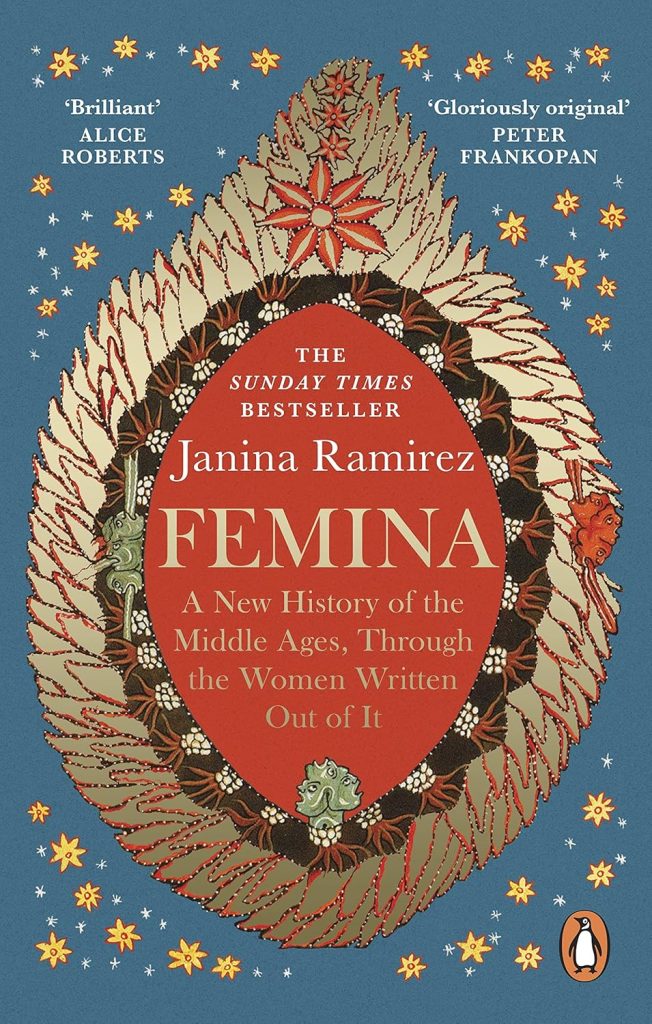
Author: Janina RamirezPublisher: WH Allen (part of the Penguin Random House group of companies)Reviewer: Stephen Keim
It is not difficult to discover the author, Janina Ramirez’s central objective in researching and writing Femina. Ramirez explains her approach taken in writing Femina with clarity in her Preface which runs to less than two full typeset pages.
Ramirez explains that she is not attempting to rewrite history but, rather, is shifting the focus. Ramirez addresses specific individuals and the societies in which they lived and the shifting politics, economics, beliefs and power which operated as backdrops to those societies.
The difference between the approach of Ramirez and that of most writers who have provided us with the history with which we are familiar is that Ramirez focuses on empowered women with agency from the medieval period as a way of shifting gear and providing new narratives for modern readers.
Ramirez explains that all history writing is subjective and that, while her own approach carries its own bias, it allows scrutiny of historical evidence in more inclusive ways and permits engagement with the past through fresh eyes. It provides a way to reframe what the matters on which we place value are, going forward.
Ramirez provides a lengthier overview of Femina in her 20 page Introduction. Ramirez commences with a description of suffragette martyr, Emily Wilding Davison, who, on 4 June 1913, interrupted the running of the Epsom by running onto the track and trying to present a letter to the jockey riding the King’s horse as a result of which she suffered fatal injuries. Davison’s actions which led to her death are regarded by Ramirez as important not only because she was acting to support the campaign to achieve votes for women but, also, because Davison’s own writing had argued that women had played a much more influential role in medieval society than they were permitted in the Victorian and Edwardian societies in which she had grown up.
The balance of the introduction discusses the demeaning manner in which particularly 19th century historians had portrayed women. In discussing the lack of material available to Victorian historians to draw upon to discuss influential actions of women across the centuries, Ramirez reveals a number of interesting facts about the impact of the Reformation and, thereby, explains the relevance of the term “femina” and why it was chosen as the title of her work.
One impact of the Reformation was the closing of convents which deprived women of a way of living that allowed them to be independent and to live a scholarly life including by producing scholarly writing. The religious turmoil created by the Reformation led to the destruction of texts. Depending on who controlled the machinery of power, the books destroyed could be those expressing Catholic or Protestant ideas. However, topics identified as witchcraft or heresy constituted sufficient cause for destruction. “Femina” was a term applied to any work by a female writer and, if it were scribbled against a particular entry in a list of texts held in a particular depositary, it was likely to be sufficient to cause for the actual text so labelled to be removed from the collection and to be destroyed. Femina, as the title of the book, takes on particular poignancy once one is aware of that particular fact.
The nine substantive chapters of Femina are named for the occupational categories discussed in the respective chapters. For example, the first three chapters are, respectively, entitled: Movers and Shakers, Decision Makers and Warriors and Leaders. The methodology is obviously to showcase the important actions of women in medieval Europe across a whole range of activity.
Another characteristic of Ramirez’s method is to commence each chapter by reference to a historical “Discovery!” of some kind. These “Discoveries!” are relatively modern events with many of them occurring in the 21st Century. In each case, the discovery is sufficiently important to throw new light on what was previously known about a particular place and time in medieval history. The discussion also gives the discoverer, in each case, the well earned plaudits for the hard work in making a discovery of such importance.
By using the discovery as the starting point of the discussion in that chapter, Ramirez is able to direct the attention of the reader to a particular geographical area at a particular chronological period. Each chapter discusses a period of time later than that discussed in the preceding chapter. By the end, Ramirez has, effectively, achieved a representative sample of the way in which societies operated in different places and at different points of what is generally described as the medieval period.
Since the key individuals discussed in each of the chapters are women, Femina also manages to cast quite a different light on medieval history as a whole and goes a long way to rectify the limitations of previous mainstream history which, as the Introduction makes clear, has almost entirely written women out of the historical record.
Chapter 1, Movers and Shakers, starts with a discussion of its keynote discovery, made by archaeological detective, Steve Sherlock, in 2006 at a well-worked site near the town of Loftus in the North Yorkshire Moors. The discovery, in what was known as grave 42, was of evidence of the form of burial of the woman who has become known as the Loftus Princess. The evidence consisting of metal and precious stones has allowed Ramirez to paint a picture of the life led by the Loftus Princess and the community in which she lived. The Princess was buried in a bed (a sign of the high esteem in which she was held by her community) and was wearing very precious jewellery also indicating the influence she wielded during her life during the Seventh Century CE.
Ramirez, armed with the in situ evidence then draws upon what is known about other jewellery of the kind found in grave 42 to infer more about the Princess’s likely influence in her community during her life. Ramirez also draws upon contemporary writings such as the epic poem, Beowulf, and the writings of the churchman, the Venerable Bede, to throw more light on the type of influential person the Loftus Princess was likely to have been.
In a method followed in subsequent chapters, Ramirez focuses outwards from the central character to chart the broader society of that time and the role played by women in that broader society and, drawing from that information, focuses inwards again upon the life and times of the central character, the subject of the important discovery for that chapter. This is an iterative process drawing upon vast quantities of specialised knowledge and, with each iteration, the reader’s understanding of the broader and more narrow societal contexts becomes deeper and richer.
Ramirez deploys her writing skills and extraordinary research skills to produce a fascinating introduction to quite esoteric historical subjects. The reader, even if not wiser for the experience, is much better informed for the effort.
Chapter 2, Decision Makers, begins with a discovery in August 2021 at Cookham in Berkshire, England, of evidence of the presence of the monastery over which the abbess, Cynethryth, presided during her life in the 8th Century CE. The broader discussion is of various powerful women of that time exercising power and influence in the Anglo-Saxon Kingdom of Wessex.
Chapter 5, Polymaths and Scientists, begins with the actions in 1948 of medieval scholar, Margarete Kuhn, in post-war Germany to secure the safety of an original vellum manuscript of 12th Century theologian, scholar and musician, Hildegard of Bingen. Hildegard will be known to some readers of Femina if only because her musical compositions continue to be played and recorded and shared in the 21st Century. Nonetheless, Ramirez’s detailed presentation of Hildegard’s broad range of creative and scholarly achievements is enjoyable to read and pleasantly instructive.
Femina constitutes a conception of originality, beautifully executed. It succeeds in demonstrating that much historical writing leaves out more than it conveys. The great man conception of history leaves out the history of half of everybody who lived and very much more. Femina demonstrates, without being preachy at any point, that there are better and more inclusive ways of describing the past.
A deeper truth emerges from Femina. Ramirez’s references to the writings and beliefs of Emily Wilding Davison emphathise this truth. If we believe, wrongly, that women (or any minority group) failed to contribute to learning and the well-being of their societies, we are more likely to believe that any future such contribution may, also, be disregarded and obstructed. A richer and more inclusive understanding of the past can only enhance a rich and more inclusive future.
Author: Terri JankePublisher: NewSouth BooksReviewer: Stephen Keim
In the early nineties, Terri Janke found herself studying law in Sydney at the University of New South Wales. She had been born, and grew up, in Cairns in far north Queensland. She was not a perfect law student and dropped out during her third year. Dropping out of university is not always the worst thing that can happen to a person. Janke ended up working at the Australia Council for the Arts for its Aboriginal Arts Board. In this role, Janke found her abiding interest in intellectual property and what it could and could not do to protect First Nations culture in Australia. ln this way, when she returned a few years later to complete her degree, Janke escaped the expectations that weigh heavily upon many an Indigenous Law Student that they will serve their social purpose in life by becoming criminal lawyers.
Janke’s heritage is complex befitting Australia’s mix of Indigenous and immigrant cultures. Janke has both Meriam and Wuthathi (among others) strands to her Indigenous heritage along with Malay and Philippines origins.
Having discovered the law of intellectual property at the Australia Council, Janke’s social purpose in life has turned out to involve understanding more deeply the inadequacies of intellectual property law, particularly, to meet the needs of Indigenous Australians and to work to overcome those adequacies in every possible way.
Janke graduated in 1995; started her own law firm in 2001; and completed her doctoral thesis in Indigenous Cultural and Intellectual Property (“ICIP”) at the Australian National University in 2019. True Tracks is Dr Janke’s doctoral thesis adapted for the general reader.
The title of the book, True Tracks, is taken from a set of principles intended to lay down best practice for ethical engagement with Indigenous people, particularly, when dealing with Indigenous culture and Indigenous information and knowledge.
The name for the set of principles has a more interesting origin. Janke recounts how she addressed a seminar in her home town of Cairns and found her image and her story and the cultural descriptor, cultural crusader, on the front page of the next day’s edition of the local newspaper, the Cairns Post. On an ensuing flight to the Torres Strait, a Torres Strait woman recognised Janke from the newspaper and began a conversation. Fearing condemnation for being too big for her boots, Janke was surprised and gratified to receive only praise from the Auntie who told Janke to stay on track; to listen to her heart; and that she would, in her work, lay down true tracks for the future. Janke has obtained inspiration and security of heart in the words of the Auntie.
There are ten True Tracks principles but they have, as the Auntie predicted, provided the basis for other sets of protocols developed by Janke, working for different organisations and agencies, to guide the ethical engagement with Indigenous persons and their cultural property across many different fields of endeavour.
The principles are relatively short and accessible but the moral imperatives they carry are clear to the reader. They comprise the need for respect; self-determination and empowerment; free, prior and informed consent which is dependent on ongoing consultation and engagement; maintaining the integrity of the cultural property; ensuring secrecy and privacy where that is appropriate and necessary; proper attribution; built in benefit sharing; the maintenance and strengthening of Indigenous culture; and the recognition and protection of ICIP rights.
Janke lists different aspects of Indigenous cultural heritage or ICIP as falling within the fields of artistic works; literature; performance; languages; knowledge; cultural property (including objects held in museums); human remains; immovable cultural property such as sites and places; and documentation of Indigenous people and culture.
Janke having explained the concept of ICIP and the content of the True Tracks principles in the opening chapter, each subsequent chapter of the book involves a case study of the state of protection for Indigenous cultural heritage in a different field of endeavour. Chapter 2 deals with property in Indigenous languages; chapter 3 with the visual arts; and chapter 4 with Indigenous architecture and Industrial design.
Each chapter pursues a similar methodology. The operation of intellectual property protections within the existing law, to the extent they are relevant to the particular field of endeavour, is carefully explained. The deficiencies of the existing legal protections are also explained. Generally, the elements of Indigenous cultural heritage are not protected. In many areas, this is because, under the existing law, no one owns the heritage or the knowledge. Despite the importance of Indigenous languages to the communities who traditionally have spoken them, no intellectual property exists in the language or the individual words of the language. So anyone can take an Indigenous word and appropriate it to their commercial or other use without permission or even consultation. In many areas, the valuable community knowledge is unprotected but the act of stealing the heritage creates things which are protected by the law. Thus, the performance of a traditional dance may not be an artistic work capable of protection but the filming of a performance creates property in the resulting film protected by the law which can not only be exploited by the film-maker but which can exclude the original dancers and the community who preserved the dance over many generations even from accessing that film.
Each study then looks at the way in which the law’s deficiencies have expressed themselves in the particular field. In many cases, the issues go back to the beginnings of the colonising of the Australian continent. Aboriginal objects, and even human remains, have been collected and removed to museums, in Australia and overseas. Aboriginal words have been collected in notebooks by anthropologists who now have exclusive rights to the contents of the notebooks. Aboriginal stories have been collected and republished in books the copyright of which now belongs to the collecting author. On many occasions, the expropriation has been, and is still being, done without any compliance with the True Tracks principles, that is, without respect, consent, consultation, attribution or any sharing of the benefit.
In each of the fields, however, Janke documents the steps taken to supplement the law with agreements and protocols based on the True Tracks principles. In each field of endeavour, Janke, not only, documents shameful incidents of cultural theft but, also, recounts examples where activists have confronted those who would act, exploitively, and brought them to heel. There are also many stories of individuals and organisations who have consulted Janke and other Indigenous lawyers for guidance and who have, willingly, developed their own best practice guidance implementing the True Tracks principles. Consultation carried out over time with the communities to whom the cultural knowledge belongs has led to the deficiencies of the underlying law being supplemented by agreements which have protected the interests of the communities while allowing for mutually beneficial use of various forms of knowledge and information and creative endeavour.
The surprising thing for the reader is that True Tracks becomes much more than a study of the deficiencies of the law and the ways in which those deficiencies may be addressed. It becomes a series of narratives of heroic endeavour in which a new beneficial paradigm has been created and of the positive benefits which have flowed therefrom. But it has also become a guide to the rich field of creative work being carried out by Indigenous Australians in the fields of painting; craft; education; architecture; linguistics; music, dance, environmental management and regeneration; cooking and gastronomy and business and many more.
The reader comes away with a list of Indigenous authors that one must read and a list of Aboriginal performers to whom one must listen and whose videos one must watch, as well as a number of arts and craft exhibitions that one must simply not miss.
Thus, in the chapter on Indigenous languages, not only has Wiradjuri woman and author, Tara June Winch, written a highly decorated novel called The Yield, she has promoted aspects of the Wiradjuri language in her book in a way that respected the community to whom the language belongs. Her respect and consultation for the owners of the language has led to a strengthening of the community’s pride in itself and its sense of well-being. A different less respectful approach is likely to have had very different impacts both for Winch and the Wiradjuri people, everywhere. Other Indigenous writers include Dr Jared Thomas: Calypso Summer and Songs That Sound Like Blood and Anita Heiss: Yirra and her Deadly Dog Demon and River of Dreams.
A heart warming story of struggle involves the copyright to all of Albert Namatjira’s artworks. In what seems to have been a thoughtless act, in 1983, the Public Trustee of the Northern Territory sold those rights to a private publisher for $8,500. A large number of people and institutions, including lawyers and filmmakers, ran a campaign that led to that copyright being, voluntarily, returned in October 2007 to a trust created to benefit Namatjira’s family. A careless wrong of the past had been righted by persuasion.
Indigenous recording artists working closely with communities include Shellie Morris and Jessie Lloyd. Dance companies such as Bangarra Dance Theatre and NAISDA College are, of course, well-known for performing and developing traditional dances with the support and permission of traditional communities.
True Tracks also provides the names and websites of artisans, tourism operators and bush food producers who are working in their respective fields producing authentic product respecting the cultural property on which they draw and applying the True Tracks principles of respect, consultation, prior informed consent and sharing of benefits.
Something deeper and more pervading also emerges. The reader, gradually, learns that the concept of ethical dealing with First Nations people is not only something for the filmmaker about to journey into the Outback to shoot a documentary or the music producer about to sign up a talented group from Cherbourg. And, gradually, the reader learns that acknowledgement of traditional owners is not something merely for formal occasions. And, gradually, the reader learns that being a Wuthathi man or a Turrbul or Quandamooka woman is not something for show but rather goes to the very heart of a person’s sense of self. We should acknowledge country and its traditional ownership, every day. We can remind ourselves to do this by incorporating it in our signature blocks and on our home pages. We can be interested in whose country we are on when we travel and very conscious of whose country we tread upon when we are at home or at work.
I am indebted to Dr Janke. True Tracks has taught me much: many things of which I am now aware and other things that I will perceive more clearly with time and reflection. True Tracks is a fascinating read as well as a scholarly work. I recommend it, highly.
Author: Ignazio SilonePublisher: Signet Classics (1986)Reviewer: Stephen Keim
I have a friend who works in North Queensland at a community legal centre. He is about my age and we go back a long way. This friend shares my passion for left wing causes and, in particular, my opposition to the death penalty, anywhere, at any time, for any reason. We share tidbits in which we think the other may be interested. Silone’s classic 1936 novel, Bread and Wine, something much more than a tidbit was shared with me by my friend, almost a year ago.
In a recent period of unexpected free time, I found the book lying on a nearby shelf and I am very glad that I took the opportunity to read it, almost then and there.
Bread and Wine was first published in 1936 in Switzerland in the German language with the German title, Brot und Wein. The novel is set in the poor region of the Abruzzi in southern Italy and was very successful, when first published, as a revealing portrait of the injustices being perpetrated by the Mussolini’s fascist regime. It centres around the experiences of Pietro Spina, a socialist activist, who has returned, without permission of the authorities, from exile and has been given the task by the Party to organise the poor peasants of his home region in the service of the Revolution.
The reader meets a very ill Spina in an early chapter being hidden by a supporter, Cardile, in his barn. Cardile summons, with a degree of deception, the local doctor, Nunzio, an old school friend of Spina to provide treatment and medicines. Nunzio is reluctant, at first, having abandoned any expression of radical ideas as a necessity for professional advancement and self-preservation. But, for a time, Nunzio, inspired by Spina’s words and example, provides the necessary treatment and, with Cardile, devises the plan that Spina will disguise himself as a priest, Don Paolo Spada, while he recuperates in the extremely poor hillside village of Pietrasecca.
The result is that, for the course of the novel, at least, the main protagonist is a reluctant priest attempting to preach rudimentary ideas of socialist revolution to an utterly sceptical group of old poor peasants. Irving Howe in his introduction to the 1986 Signet edition, characterises those parts of Bread and Wine where the action occurs in a rural setting (which is almost the whole of the novel) as having a feel and style of allegory. I would go further and suggest that Don Paolo Spada’s efforts at avoiding any priestly duties while raising visions of a better more just future with his rural audience carries a feel of Moliere’s, Le Médecin Malgre Lui, and is within touching distance of farce on many occasions.
Howe identifies the central themes of Bread and Wine when he describes Silone’s work as portraying the competing visions of the socialist promise of socialist liberation and the Christian promise of spiritual transcendence. Howe describes Silone’s choice as a writer as seeking to pursue both visions despite the tension which exists between them.
While this may be the central tension in Bread and Wine, Silone manages to give expression to many different visions of reality. The peasants, when challenged, articulate a reasoned acceptance of their reality which has persisted for generations. What is the point of struggling to change a fixed reality, they say. When a disappointed Spina reflects upon their responses to his provoking questions, he finds it hard to fault the peasants’ logic.
Many characters debate the choice between conformity and resistance in the context of an unjust and repressive regime. Spina, as Don Paolo, is a voice in favour of action as is his old and respected, but generally sidelined, teacher, Don Benedetto. But there are many voices for conformity among the townspeople whose positions also carry persuasion.
There are ironies flitting back and forth between Silone’s own life and the action in Bread and Wine. Spica, in the novel, is raised by his grandmother because his parents died in the earthquake which struck the region in 1915. Silone’s father died in 1911 but his mother was killed in the earthquake.
Don Paolo, as progressive priest, comforts and restores a young activist, Luigi Murica, who had, after severe beatings at the hands of the regime’s police force, been seduced into becoming a police informer against his socialist comrades. Don Paolo assures Murica that he is forgiven and that he trusts him by telling Murica that he is not a real priest. Strangely, it was revealed by research in the 1990’s that Silone, himself, had been a police informer in the 1920s and that he broke with the police when his younger brother died as a result of torture and beatings at the hand of the carabinieri. In forgiving Murica, was Silone forgiving himself for his own actions?
Spica speaks a number of times in the novel concerning the matters that compelled him to return from exile despite the risks that carried for both his safety and his freedom. Remaining outside his country and outside the struggle was pointless, says the character. Silone, on the other hand, remained in exile and, no doubt, by writing and publishing Bread and Wine, was a much more effective opponent of the fascist regime than if he had returned.
There is no doubt that both the author and the main character had become disillusioned with Soviet communism and the Italian communist party’s slavish devotion to the latest directive of the Soviets which same devotion it demanded from its members. When Spica receives some policy papers arguing approval of the great purge and show trials then being set up in Moscow, he glances at them and puts them in the fireplace. When pressed by his party leader in Rome, Spica declines to grant his approval. His argument, in support of his refusal, is one of a need for plurality of thought and critical judgment, even in the course of a socialist revolution. None of this dulls Spica’s own passion to resist the government and to work and organise for the betterment of the conditions experienced by the ordinary people even at risk to his safety and his life.
The position of the Church is characterised by its complete surrender to the fascist party in power and the support it gives to that government by turning up to key public events and in other ways. For this, it is condemned. But Spica’s experience as a fake priest gives him an insight into the comfort that ordinary people demand and, even despite his best efforts to refuse to cooperate, take from their clergy. As Don Paolo, Spica comforts and inspires people, especially, young people and women, in ways he could never achieve as a socialist organiser, alone. He changes people’s lives, positively, for the good and he receives devotion, even love, from many including the two young women, Christina and Bianchina, both of whose lives he has dramatically touched. And when Spica sees a real priest in action, Don Girasole, he is impressed by how much good a poor hard working priest does for his community including in areas for which the government has responsibility but fails to act with compassion or empathy.
It is 25 years since the Signet edition was published and 75 years since the first edition of Bread and Wine was published, albeit, in German. In some respects, it has become quaint and, no longer, relevant (although every avowed socialist who broke with Stalinism in the 1930s will always have huge Brownie points from me). In other respects, Bread and Wine retains a timeless quality. For me, Bread and Wine was not about the competing visions of the socialist promise of socialist liberation and the Christian promise of spiritual transcendence identified by Howe. It was more about the luxury of principles when we do not have to put them into action and the varied human responses of those who have to live through some kind of challenge or repression. When our beliefs have the potential to cost us dearly, or even a little, there will be no right answer and everyone will respond in their own way. For some, preserving professional advancement or the safety of oneself and one’s family will take precedence. Others may choose their principles and, perhaps, even martyrdom, whether Christian or socialist or both. And all, hopefully, will learn something along the way, perhaps, even from those who hold different views and make different choices to ourselves.
Author: Max PorterPublisher: Faber and FaberReviewer: Stephen Keim
I have a friend who, for no good reason except that she knows that I like to read, drops off four excellent new books at my chambers. I have no obligation to repay my friend except by reading the books and enjoying them. With Lanny, I have done something to expiate my growing moral indebtedness.
Lanny is also a source of brownie points for me on the home front. Lanny is a novel and I, famously, never read novels and, oh so unfairly, suffer moral ignominy for my narrow (non-fiction) choices when it comes to discretionary reading.
The action in Lanny takes place in an ancient village, come commuter town, an hour out of London.
Lanny of the title is an unusual child. His mother writes murder mysteries. His father works in the city and exhibits many of the undesirable personality traits of men who work in the city.
Lanny’s Dad’s line manager refers to Lanny as mad as a March hare which annoys Lanny’s Dad who realises, nonetheless, that it is he who has transmitted such perceptions to his boss. Lanny’s unusual qualities are such that words can only hint at them. The school report says that Lanny has an innate gift for social cohesion and will calm a fraught classroom with a single well-timed joke or song.
Lanny is calm and unhurried and comes in with the sound of a song on his creaturely breath, stinking of pine trees and other nice things. Lanny is, no doubt, smart for one so young but his knowledge is as much attributable to connections and understanding of the deeper magic as it is to intelligence and learning.
Pete is a once, and still, famous avant garde artist from decades earlier who applies his trade, quietly, in the village. Pete and Lanny’s mother appreciate one another and Pete, at first reluctantly, agrees to give Lanny some art lessons. And a deep bond is formed between the old artist and the knowing child.
Peggy is the old mad witch of the village. She understands, better than anybody, Lanny’s unusual ability to connect.
The narrative of Lanny is told in the voices of the characters. We don’t hear about the characters. We hear from each of the characters. We hear what they think including about one another.
Befitting an ancient village, the town has its own haunting, its own local god or saint in the form of a shape shifting, mood changing Dead Papa Toothwort. As Toothwort moves around and through the village, he overhears the townspeople speaking and, like the pub closing scene in part II of The Waste Land, the ordinary voices of the town scatter across the page and catches of tawdry temporary dramas of daily life are glimpsed before fading and giving way to the next.
Porter, born in High Wycombe, was formerly a book seller and an editor having been editorial director at Granta and Portobello Books until 2019. His debut novel, Grief is a Thing with Feathers, was a huge success in 2015 and he published The Death of Francis Bacon in 2021. Lanny was released in 2019. Lanny is described as a book about a family who lives in a village peopled by the living and the dead. In this respect, it resembles Juan Rulfo’s Pedro Padramo. It may equally be said that every town and every locality is haunted by what has taken place there. We rely on novels like Lanny to remind us of this deeper truth.
The lyrical music of the competing voices telling their respective points of view becomes stretched and frantic as mystery descends upon Lanny’s village; relationships fray and are tested; and tragedy beckons. What does the deeper magic allow the living? What has Toothwort done? Do the ancient verities offer any mercy?
Lanny is a beautiful novel and comes highly recommended by this reviewer.
Stephen Keim
Clayfield
25 May 2022
Author: Michael SpringerPublisher: Echo BooksReviewer: Stephen Keim
The Flower Bed is an epic story of one man’s life. It spans more than 60 years from 1971 when Louis O’Brien turned 10 in the harsh environment of the Midtown West area of New York City until, as Louis Montgomery, he is living on a substantial property in Lincolnshire, England.
For a book that is focussed very much on the tribulations of one person, The Flower Bed, through telling Louis’s personal story, manages, also, to track and reference many events of the times spanned by Louis’s life.
The company for which Louis works for much of his adult life is BMI which looks, in its emerging phase, a lot like IBM as it transforms from a world of adding machines and typewriters to the brave new world of super computing. And an event happens in New York in September 2001 which leads to the destruction of a building and the loss of many lives but which does not involve the intervention of aeroplanes.
Louis’s early life in New York was particularly inauspicious. He lived with his father, Joseph, who was a low level organised criminal boss who was viciously cruel both in his work and in his treatment of Louis. He also lived with Aunt Mary who was not Louis’s aunt but was Joseph’s partner in a manner of speaking and shared Joseph’s proclivities for alcohol and sordid sexual activity not necessarily restricted to two people.
Louis had two faintly bright spots in his life. One was Mrs Fitzgerald, the across the corridor neighbour who treated Louis with kindness and fed him at night which was important because neither Joseph nor Mary were concerned for any aspect of Louis’s welfare. All too soon, Mrs Fitzgerald was taken from Louis’s life and this world.
The second was the local public school which Louis attended and where he excelled academically. His intelligence and willingness to learn were noticed by Louis’s teachers and there was talk and hope that scholarships to higher education might provide Louis a pathway out of the predicament that life otherwise offered.
That hope was short lived. Louis had been unmercifully bullied by a particular individual and his hangers on resulting in Louis being ambushed and badly beaten a number of times. On the one occasion that Louis decided that he had to fight back, his talent as a fighter proved too much and his impromptu methods went too far and he found himself on assault charges in the local juvenile court. No young man with a conviction could ever hope to win a scholarship such that that pathway was, forever, lost.
Joseph insisted, when Louis was 12 years old, that Louis spent time working at the Shed which was a workplace used for furthering the purposes of organised crime. Louis ran messages and delivered and received parcels but that was insufficient for his father. Louis was required to commit arson and stand cockatoo when murders were being committed. He witnessed violent acts that would have traumatised hardy individuals of a much less tender age.
When Louis was 17 and all hope had evaporated, a maternal uncle, Phillip, stepped from the shadows. Phillip informed Louis of the true identity of his mother and her fate. Phillip informed Louis of other important aspects of his heritage and even of an inheritance from his mother’s family.
Thanks to Phillip and the inheritance but, equally, at great cost to Phillip, Louis found himself with a new identity on a merchant ship working his way to Sydney, Australia. The new identity included a high performing, albeit, fake graduation certificate from a prestigious private American high school.
So, Louis escaped the life of poverty, cruelty and crime that had been foisted upon him. He escaped the clutches of his cruel and criminal father. When he arrived in Sydney, he was able to achieve entry into the business school of Sydney University. Louis had been given a fresh start that few people who experience circumstances of the kind he had endured ever receive.
Louis, through his widowed landlady, Mrs Smith, even found another kind and elderly lady who loved and looked out for him.
From his fresh start, Louis Montgomery achieved academic acclaim. He found good employment in the business world and he achieved great worldly success.
Socially, Louis found confidence in speaking to women such that his amatory success outnumbered the proverbial hot dinners for much of his university career. And, notwithstanding the crassness that excessive popularity can bring, Louis had the insight to identify the one woman he had met whom Louis’s heart recognised was the one for him.
Louis received his fresh start and he made full use of it. But he carried mental scars from the traumas of his early life and this led to flaws in his personality which would cause him and others much pain among those worldly successes.
The flower bed which gives its name to the book appears in the very first chapter of The Flower Bed and is visited by an older man and a five year old child who are mysteriously not identified. The reader wonders for much of the book where that flower bed fits into the whole narrative and the question is not fully answered until the very last chapter when the narrative returns to the side of the garden and the man and the girl are identified and reveal the thoughts in their hearts.
The Flower Bed is a gripping narrative and the reader is, throughout, keen to find out about the latest adventures that life has in store for Louis and those around him. Both the trajectory of the novel and the style of story telling reminded this reviewer a little of a Thomas Hardy novel. In The Flower Bed, the omniscient narrator is very much in control and foreshadows events to come and takes the reader into the inner workings of the characters’ hearts and minds. In style, The Flower Bed is unlike many modern novels in which enigmatic slices of action are revealed and the reader learns to put the greater picture into place, themselves.
The omniscient narrator also assures us that Louis is a sympathetic character for whom we should feel empathy and concern. I did feel that empathy and concern although the more rational aspects of my personality, at times, wondered whether Louis was deserving thereof as his lack of insight into his flaws and unwillingness to address them brought more chaos to his world.
The Flower Bed is not a short work at just over 400 pages. It is, however, an enjoyable and compelling read and, for those of us who have lived much of the last six decades or so, its tracking of life and technology and the interaction between the two will bring out a degree of nostalgia.